How Do Residents In Rural Communities Perceive The Quality of Healthcare in Armenia?

COAF Health team publishes first ever study on perceptions of healthcare in Armenia’s rural communities.
For over twenty years, COAF’s healthcare team has worked side by side with rural communities, listening to their needs, challenges, and expectations. Today, that lived experience has taken an important step forward.
A new research paper co-authored by the head of COAF’s Health Programs, Dr. Lorky Libaridian, and COAF physician Dr. Lusine Antonyan, together with fellow Armenian researchers, has been published by BMC Health Services Research.
The publication marks an important milestone for COAF’s Health Program and for rural healthcare in Armenia: it brings the lived experiences of village communities into an internationally recognized, peer-reviewed scientific space, where they can inform policy, practice, and research both locally and globally.
The study is the first ever to formally and scientifically explore how people in rural Armenia perceive healthcare quality. It does not simply document experiences; it explores a question that has rarely been asked in Armenia through rigorous research: What does good healthcare feel like to the people who use it?
Background—Barriers to Access
Armenia’s healthcare system has long been shaped by the Semashko model, a Soviet-era model that once emphasized strong primary care and universal access. Over time, that focus shifted toward secondary and specialized care, leaving rural communities at a disadvantage. Today, residents in villages are affected by limited services, sky high out-of-pocket costs, and inconvenient travel distances to services, making healthcare both physically and financially difficult to access. While some of these challenges are also relevant for residents in urban areas, they are far more present in rural communities. This experience has not yet been represented in national research, which made listening to rural voices all the more important and necessary.
“For two decades, the voices and experiences of people living in rural Armenia have guided COAF in informing its programs,” said Dr. Lorky Libaridian, Head of COAF Health Programs. “We realized that this insight wasn’t reaching people outside of COAF, who are making policy decisions or implementing similar projects. So this last time when engaging with the communities, we took a very systematic approach, and then published our research.”
Here’s what Drs. Lorky, Lusine, and the team uncovered.
Lifting Rural Voices—16 Focus Groups in 15 Villages
The newly published research is grounded in real community voices. The COAF team conducted 16 focus group discussions across 15 villages in Lori with over 100 rural residents, each lasting about 80 minutes on average.
It reflects hours of direct conversation with families, teachers, and community members who rely on rural healthcare services every day.
Lessons from the Field—What We Learned
The study was designed to support ongoing efforts to improve and strengthen primary healthcare in Armenia by better understanding what patients value and expect from the system. Findings reveal a complex cycle of experiences that deeply shape how families in Armenia’s rural regions access healthcare.
Trust and Respect Matter as Much as Medicine
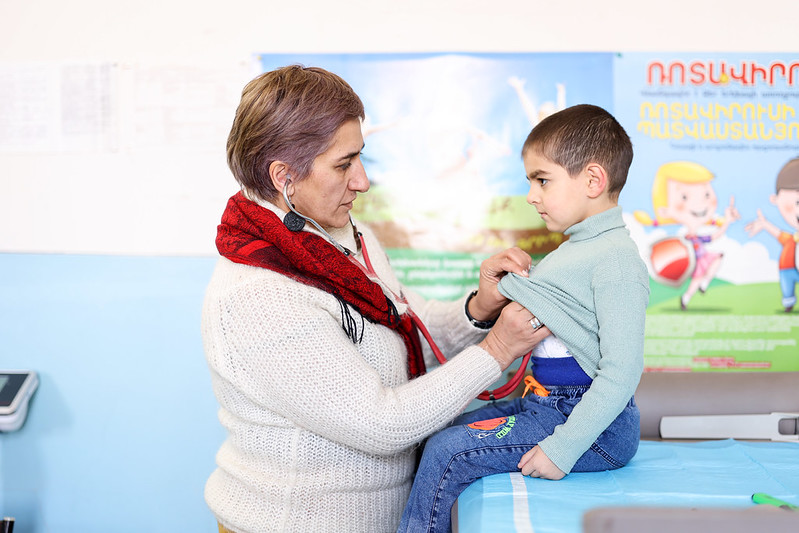
One of the strongest messages that emerged from the research is that healthcare quality is not only about medical treatment. It is also deeply about trust and respect. For many participants, good care was defined by how doctors communicated, listened, and demonstrated human consideration.
Feeling taken seriously, being treated with dignity, and respected as a person often mattered just as much as receiving medication or tests.
Communication Is Central to Healing
The chosen interview style encouraged detailed and personal responses, which revealed how strongly people associate good healthcare with being heard and understood. Participants had time to fully share their concerns and expectations and repeatedly described clear explanations (for example, when getting their test results back), patience, and warmth from healthcare providers as transformative. Even short, thoughtful conversations reduced fear and helped patients feel more confident in their care. Communication itself was experienced as a core part of quality healthcare, not an addition to it.
More Testing is Often Mistaken for Better Care
Many residents associated quality with receiving more tests and referrals. This reflects not only expectations shaped by past experience, but also gaps in trust and health literacy. When patients feel uncertain, additional testing can be seen as reassurance rather than medical necessity. In practice, this often translates into higher out-of-pocket expenses for families, increasing the financial cost on households that already face limited resources. Unnecessary testing has also been shown to cause medical harm.
These findings highlight the importance of building confidence in evidence-based care and helping communities understand when testing is helpful, when it is unnecessary, and how thoughtful clinical judgment is itself a sign of quality.
Why This Research Reflects COAF’s Approach
Unlike much of the existing research in Armenia, this study was designed to hear the voices of those who are rarely represented in research–people living in rural communities, sharing their own understanding of healthcare quality through lived experience.
This research helps address that gap by offering qualitative evidence that reflects how people understand, trust, and navigate the healthcare system in their daily lives.
From Research to Action
Spanning three months, from March 30 to June 29, 2022, the study captured a wide and diverse range of voices from rural communities. But its value does not end with publication. This research is not an endpoint—it is a foundation for action.
Its findings directly inform how we think about:
- what a strong and responsive primary healthcare system should look like,
- training healthcare professionals,
- designing patient-centered care models,
- developing meaningful community education,
- strengthening trust between providers and patients,
- and clarifying the roles of healthcare institutions, national systems, and organizations like COAF.
It reinforces COAF’s belief that sustainable healthcare depends on well-designed systems that intentionally cultivate trust, communication, and dignity—alongside medical expertise and infrastructure.
A Milestone for COAF and Rural Armenia
We are proud that this research, shaped by COAF’s on-the-ground experience and Armenian medical expertise, has reached an international academic platform. It reflects not only the importance of rural Armenia’s realities, but also the quality, rigor, and seriousness of the work COAF is doing in the healthcare field.
It shows that local experience, when studied with care and scientific integrity, can contribute meaningfully to global conversations—and help build better healthcare systems at home and beyond.

Latest Articles